The Louvre Abu Dhabi is one of the most remarkable cultural attractions in the United Arab Emirates. Opened in 2017 on Saadiyat Island, it is the first universal museum in the Arab world. This partnership between France and the UAE represents more than just an exchange of artworks, it stands as a bridge connecting people, ideas, and histories from every corner of the globe.
It showcases masterpieces from different civilizations and periods, emphasizing the shared human story that unites us all. For visitors, it is both an artistic journey and a powerful symbol of cultural understanding.
Architectural Wonder: The Floating Dome
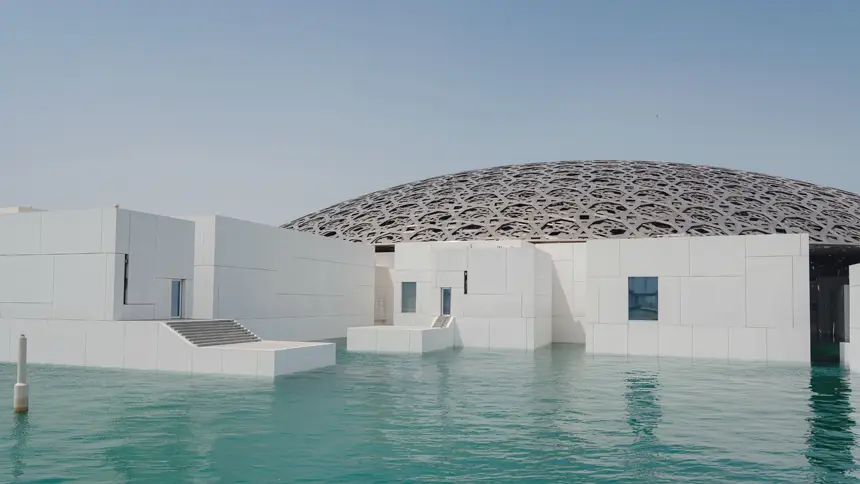
One of the first things that captures every visitor’s attention is the museum’s architecture. Designed by the world-famous French architect Jean Nouvel, the Louvre Abu Dhabi combines modern innovation with traditional Arabic design.
Key Features of the Structure
- Dome Design: The massive silver dome appears to float above the complex. It is made of nearly 8,000 metal stars arranged in geometric patterns that allow sunlight to filter through.
- Rain of Light: When daylight passes through these patterns, it creates a magical effect known as the “rain of light.” This gives visitors a feeling of walking under a natural canopy of light and shadow.
- Water Surroundings: The museum is surrounded by the sea, making it seem as if it is floating on water. This reflects the importance of the Arabian Gulf and its long connection to trade and culture.
- Sustainability: The dome provides natural cooling, reducing the need for air conditioning and helping maintain a comfortable environment inside.
This architectural masterpiece not only protects priceless artworks but also becomes an artwork itself, a meeting point of light, water, and creativity.
The Museum’s Concept: Unity Through Diversity
The Louvre Abu Dhabi is more than a collection of beautiful objects. Its vision is to tell the story of humanity through art. Its approach is universal, meaning it doesn’t separate exhibits by region or religion. Instead, it shows how different civilizations influenced and learned from each other over time.
Themes
The museum’s displays highlight how people across continents have shared emotions, beliefs, and ideas through art. They reveal how travel, trade, and migration shaped artistic traditions, while innovation and new inventions inspired creativity. This inclusive approach lets visitors see history as one connected human journey rather than separate stories.
Collections: Masterpieces from Around the World
Inside the museum, galleries are arranged in chronological order, guiding visitors through the evolution of human creativity. The collection includes paintings, sculptures, manuscripts, and artifacts from both Eastern and Western cultures.
Highlights from the Collection
Ancient Civilizations
Artifacts from Egypt, Mesopotamia, Greece, and India reveal early forms of writing, sculpture, and worship. Bronze tools, pottery, and early religious symbols show the beginnings of civilization.
Medieval and Renaissance Periods
Stunning European paintings, Islamic manuscripts, and Chinese ceramics are placed together to illustrate cultural interaction during the Middle Ages. Works by Leonardo da Vinci, Giovanni Bellini, and other masters reflect the artistic rebirth of Europe.
Modern and Contemporary Art
Pieces by Pablo Picasso, Paul Klee, Jackson Pollock, and Ai Weiwei show how modern artists experimented with new ideas and styles.
Cultural Treasures from the Islamic World
It proudly presents intricate calligraphy, decorative arts, and scientific instruments that reveal the golden age of Islamic civilization.
Every item is carefully chosen to demonstrate that creativity has always been a shared human quality, crossing all borders and beliefs.
Temporary Exhibitions: Changing Perspectives
It is not just a static collection, it constantly evolves. Each year, the museum hosts temporary exhibitions in collaboration with French museums, including the Louvre Paris, Musée d’Orsay, and Centre Pompidou.
Past exhibitions such as “10,000 Years of Luxury,” “Furusiyya: The Art of Chivalry Between East and West,” and “Abstraction and Calligraphy” explored themes of beauty, cultural exchange, and artistic connection between East and West. These showcases draw global attention, keeping them dynamic and relevant to international audiences.
Educational Spaces and Programs
The museum is not only for art lovers but also for families, students, and young minds. It aims to nurture curiosity and creativity through its educational programs.
The Children’s Museum is designed for young visitors to learn through play and interactive displays. It encourages creativity through fun workshops and drawing activities. It offers art workshops for all ages, including painting, photography, and sculpture. Guided tours and special sessions for educators help visitors explore and teach the meaning of art. Education is a core mission of the Louvre Abu Dhabi, ensuring that art remains accessible and inspiring for everyone.
Technology and Visitor Experience
The museum embraces modern technology to make visits more engaging and informative. Digital guides and apps help people explore collections in a personalized way.
Features for Visitors
- Multimedia Guides: Portable devices or mobile apps provide detailed information, videos, and audio commentary about the exhibits.
- Interactive Screens: Many galleries feature touchscreens that show maps, artist biographies, and historical background.
- Accessibility: Facilities for people of determination ensure that everyone can enjoy the museum comfortably.
With its blend of tradition and innovation, it offers a truly 21st-century museum experience.
Location: Saadiyat Island Cultural District
The museum is located in the heart of Saadiyat Island. The area is being developed as one of the world’s leading cultural destinations, with several other major institutions under construction, such as the Guggenheim Abu Dhabi and the Zayed National Museum.
Nearby attractions include Manarat Al Saadiyat, Saadiyat Beach, and luxury resorts and restaurants offering art, relaxation, and fine dining. The combination of art, leisure, and natural beauty makes Saadiyat Island a must-visit destination for travelers seeking both inspiration and comfort.
The Museum Café and Boutique
After exploring the galleries, visitors can relax at the Museum Café, which offers light meals, Arabic coffee, and international dishes. The calm atmosphere, combined with waterfront views, makes it a perfect place to reflect on the artwork.
The museum shop sells books, souvenirs, and limited-edition art pieces, allowing guests to take a piece of the experience home. These items are thoughtfully designed, reflecting the museum’s artistic and cultural themes.
Visitor Tips
- Best Time to Visit: Weekdays are usually quieter, offering a more peaceful experience.
- Tickets: Book online in advance to avoid queues.
- Dress Code: Modest clothing is appreciated as a sign of respect for local culture.
- Photography: Allowed in most areas, but flash use is restricted.
- Time Needed: Plan at least three to four hours to fully explore the museum and enjoy the surroundings.
These tips ensure a smooth and memorable trip for every visitor.
Conclusion
The Louvre Abu Dhabi is more than a gallery, it is a celebration of human creativity, curiosity, and connection. From the stunning dome to the global collection inside, every detail reflects the museum’s mission to unite cultures through art.
For travelers, it offers an experience unlike any other in the region: a chance to walk through thousands of years of history in a single day. Whether you are an art lover, a student, or simply curious about the world, this museum invites you to discover how art has always told the story of who we are.