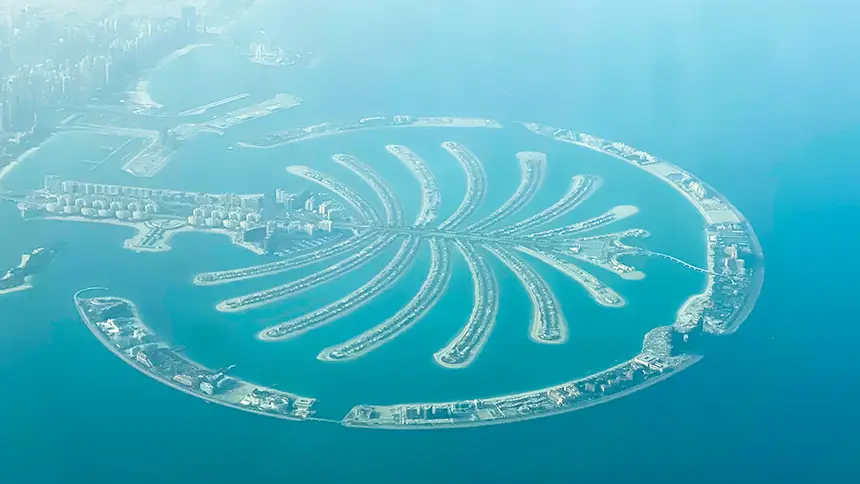
Dubai is a city famous for turning dreams into reality. Among its most iconic achievements stands Palm Jumeirah, an artificial island shaped like a palm tree. This breathtaking project has not only changed Dubai’s coastline but also the world’s idea of what engineering and imagination can achieve. It is one of the largest artificial islands on Earth, built to attract tourists, investors, and residents looking for luxury by the sea.
The Vision
Dubai in the 1990s was rapidly growing. However, its leaders wanted more than just skyscrapers and shopping malls. They wanted something that would make Dubai instantly recognizable worldwide. The idea of a palm-shaped island was chosen because:
- Palm trees are a symbol of the region and life in the desert.
- The shape allowed maximum waterfront property.
- It would stand out as a unique landmark visible even from space.
The ambitious plan was announced in 2001. The project was developed by Nakheel Properties, a government-owned real estate company.
Construction and Engineering Marvel
Building a palm-shaped island was no easy task. It required cutting-edge technology and determination.
Steps in Construction
The building of the island started with a process called land reclamation. This means that sand was taken from the bottom of the sea and sprayed into the shape of a palm tree. To keep the sand in place and protect the new land from strong waves, about 7 million tons of rocks were carefully placed around it. A huge crescent-shaped wall, known as the breakwater, was also built to act like a shield against sea currents and storms. To make sure everything was shaped correctly, engineers used GPS satellite technology, which guided them to place each load of sand and rock in the right spot. Without this advanced system, the island could not have taken its perfect palm shape. This careful combination of sand, rock, and technology turned an idea into one of the world’s greatest engineering wonders.
Challenges Faced
During the construction of this project, engineers had to deal with strong tides from the Arabian Gulf, which made the work very difficult. They also had to find ways to protect marine life and reduce damage to the environment. On top of that, the project was massive, making it one of the most costly and time-consuming developments ever attempted. Even with all these challenges, the island was completed in just six years and was officially opened in 2007.
Design and Layout
It is shaped like a giant palm tree, made up of three main parts:
- The Trunk: The central part that connects to the mainland. It is lined with apartments, shops, and hotels.
- The Fronds: 16 long “branches” that hold luxury villas and beachfront properties.
- The Crescent: A circular breakwater that not only protects the island but also hosts world-famous resorts.
It stretches 5 kilometers into the sea and adds about 78 kilometers of coastline to Dubai.
Luxury Living on Palm Jumeirah
The project is designed as a symbol of luxury. From stunning villas to world-class hotels, it offers an elite lifestyle.
Residential Options
- Private beachfront homes with swimming pools and private beaches.
- Modern apartments offer beautiful sea and city views.
- Exclusive living spaces at the top of high-rise buildings.
Hotels and Resorts
Palm Jumeirah is home to some of the most famous hotels in the world:
- Atlantis, The Palm – Known for its waterpark, aquarium, and stunning design.
- Waldorf Astoria Dubai Palm Jumeirah – Offering luxury stays with fine dining.
- Fairmont The Palm – A blend of luxury and comfort with a beachside experience.
- One&Only The Palm – A private and romantic escape.
Lifestyle Amenities
It offers a luxurious lifestyle with many facilities for residents and visitors. There are fine dining restaurants that serve food from all around the world, as well as spas, gyms, and wellness centers for relaxation and health. Shopping malls and boutiques provide a wide range of products, while private beaches and marinas give people the chance to enjoy the sea in comfort and style.
Tourist Attractions on Palm Jumeirah
It is not just a residential community, it is also one of Dubai’s biggest tourist attractions.
Famous Attractions
- Atlantis Aquaventure Waterpark – One of the largest waterparks in the Middle East.
- The Lost Chambers Aquarium – Home to over 65,000 marine animals.
- Nakheel Mall – A modern shopping center with international brands and restaurants.
- The Pointe – A waterfront dining and entertainment destination with views of Atlantis.
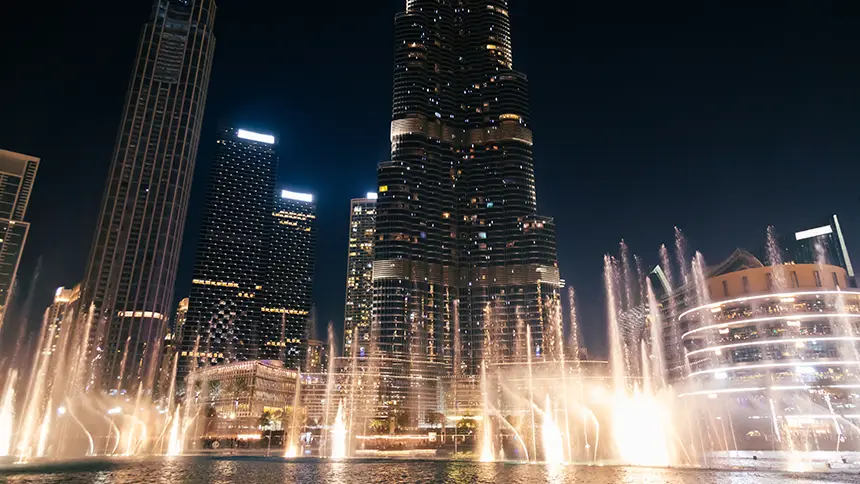
- Palm Fountain – The world’s largest fountain, offering nightly shows.
Activities to Enjoy
- Speedboat tours
- Skydiving over the wonder for breathtaking aerial views.
- Luxury yacht cruises.
- Kayaking and paddleboarding in calm waters.
Transportation and Connectivity
The palm-shaped island is well-connected to the city through modern transport systems. A monorail runs from the Gateway Station on the mainland all the way to Atlantis, making travel easy and convenient for visitors. There is also a bridge that links the trunk of the island to Sheikh Zayed Road, Dubai’s main highway, giving residents and tourists quick road access. In addition, water taxis and ferries offer a more scenic way to reach the island, allowing people to enjoy the beautiful views of the sea while traveling.
Economic and Social Impact
The project has had a huge influence on Dubai’s economy and global reputation.
Economic Benefits
- Boosted tourism by attracting millions of visitors.
- Increased real estate investment from international buyers.
- Created thousands of jobs in hospitality, construction, and services.
Social Impact
- Strengthened Dubai’s position as a luxury destination.
- Provided a high standard of living for residents.
- Brought together people from around the world in one community.
Criticisms and Environmental Concerns
While this island is admired globally, it has also faced some criticism.
Common Concerns
- Environmental Impact: The construction disrupted marine ecosystems and natural water flow.
- High Maintenance Costs: Protecting the island from erosion requires constant effort.
- Real Estate Prices: Some argue that property prices are too high, making it accessible only to the wealthy.
- Traffic Congestion: The growing population has sometimes caused road congestion.
Palm Jumeirah in Popular Culture
It has appeared in numerous films, documentaries, and travel shows. It is also a favorite location for celebrities and influencers. Skydiving photos and drone shots of the island are often shared on social media, making it one of the most photographed landmarks in the world.
Future Developments
Dubai is a city that always looks for new ideas and improvements, and the palm-shaped island is no exception. In the future, more luxury resorts and residential towers are planned to welcome both visitors and new residents. There are also projects focused on using sustainable energy to reduce harm to the environment and make the island greener. Transport systems are expected to improve as well, with plans to expand the monorail and add easier ways to move around. Along with this, new attractions will continue to be built, ensuring the island remains a global icon and a place that always amazes the world.
Conclusion
Palm Jumeirah is more than just an island; it is a symbol of human creativity and ambition. What once seemed impossible is now one of the most luxurious and visited places on Earth. From its design to its world-famous resorts, it has transformed Dubai into a global destination for tourism and luxury living.
Yes, the island faces challenges like environmental concerns and high costs, but its success cannot be denied. It has proven that with vision, technology, and determination, even the sea can be reshaped to fit human dreams. In simplicity, Palm Jumeirah is not just land; it is a dream built on water, showing the world that Dubai dares to imagine and achieve the impossible.