Long before the discovery of oil, the United Arab Emirates was an important center for trade between the East and the West. Its location along the Arabian Gulf made it a natural meeting point for merchants from India, Persia, Africa, and the Middle East. Ancient merchants traveled across deserts and seas carrying goods like spices, pearls, gold, and textiles. These routes of commerce helped connect the Emirates with different parts of the world and brought prosperity to its people. The caravan trails and sea passages also influenced the lifestyle, culture, and traditions of the Emirati people. They encouraged values like hospitality, hard work, and friendship among traders and travelers. Over time, small trading villages grew into busy towns and ports. The history of these commercial pathways shows how the UAE’s strong business spirit has shaped its identity and continues to play a key role in its success today.
Origins of Trade in the Emirates
The origins of trade in the Emirates go back thousands of years, long before the discovery of oil. The people who lived in this region were skilled merchants, fishermen, and pearl divers. They built small villages near the coast and oases, where they could find water and grow dates. The United Arab Emirates had a very important geographic position; it was located between Asia, Africa, and the Middle East. This made it a natural crossroads for commerce by sea and land. Ships from India and East Africa carried goods like spices, silk, and gold to the Arabian Gulf, while caravans from the desert brought incense, textiles, and other products.
Ports such as Dubai, Sharjah, and Ras Al Khaimah became busy commercial centers where merchants exchanged goods and ideas. The people of the Emirates also traded their famous natural pearls, which were in high demand around the world. This early commerce not only brought wealth but also connected the Emirati people to many different cultures and civilizations. Through these economic exchanges, they learned new skills, shared traditions, and built strong relationships with neighboring regions. These early business activities laid the foundation for the UAE’s growth into a modern global trade hub we see today.
Major Trade Routes and Caravan Trails
Land Routes
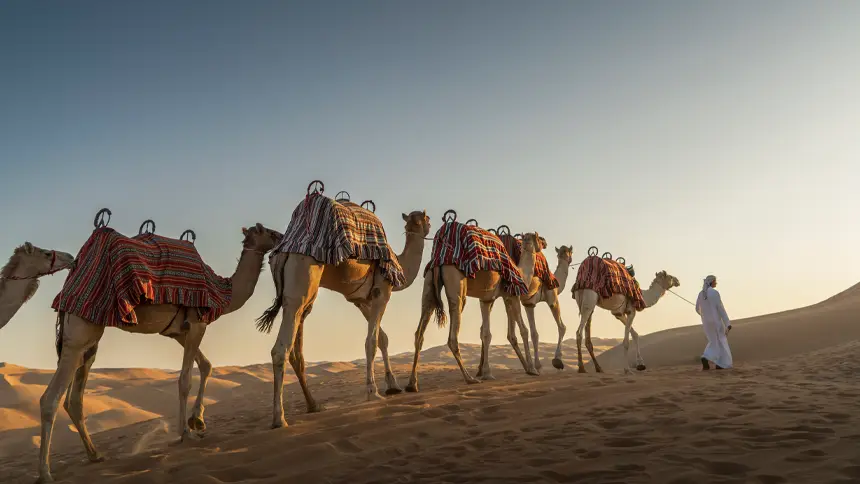
The land trade routes in the Emirates passed through deserts, mountains, and oases, linking inland areas with the coast. Caravans of camels traveled through regions like Liwa, Al Ain, and the Hajar Mountains, carrying goods such as spices, dates, and textiles. The journeys were long and difficult due to the hot weather and sandstorms, but the oases along the routes provided water, food, and shade for travelers and animals. These oases also became small market centers where merchants could rest, exchange goods, and share news. The land routes of commerce played a key role in connecting communities and supporting economic activities across the Arabian Peninsula.
Maritime Routes
The maritime routes of trade of the Emirates connected coastal towns along the Arabian Gulf and the Indian Ocean. Traders sailed wooden ships called dhows to transport goods between the Gulf, India, Persia, and East Africa. Ports like Dubai, Sharjah, and Ras Al Khaimah became major commercial hubs where merchants exchanged pearls, spices, gold, and other products. The sea passages helped the Emirates build strong business relationships with different countries and encouraged the growth of port cities. Maritime commerce became a foundation for the region’s economy and remains important even today.
Life Along the Trade Routes
Life along the ancient trade paths in the Emirates was full of adventure, hard work, and challenges. Merchants and travelers had to cross long distances through deserts, rocky mountains, and dry valleys. The weather was often very hot during the day and cold at night, and finding water was one of the biggest difficulties. To survive these harsh conditions, people traveled in caravans, which were groups of traders and camels moving together for safety and support. Camels were called the “ships of the desert” because they could walk for many days without water and carry heavy loads of goods like spices, pearls, and dates.
Navigation was done using stars, landmarks, and knowledge passed down from experienced travelers. Along the routes, merchants met people from different places and shared stories, languages, and traditions. These interactions created a mix of cultures and helped spread new ideas, crafts, and products across the region. Oases and small settlements became meeting points where travelers could rest, exchange goods, and build friendships. This exchange of goods and culture made the Emirates an important link between civilizations. The life of these early merchants showed courage, teamwork, and a deep understanding of nature. Their journeys helped shape the history and spirit of commerce that still continues in the United Arab Emirates today.
Trade Centers and Marketplaces
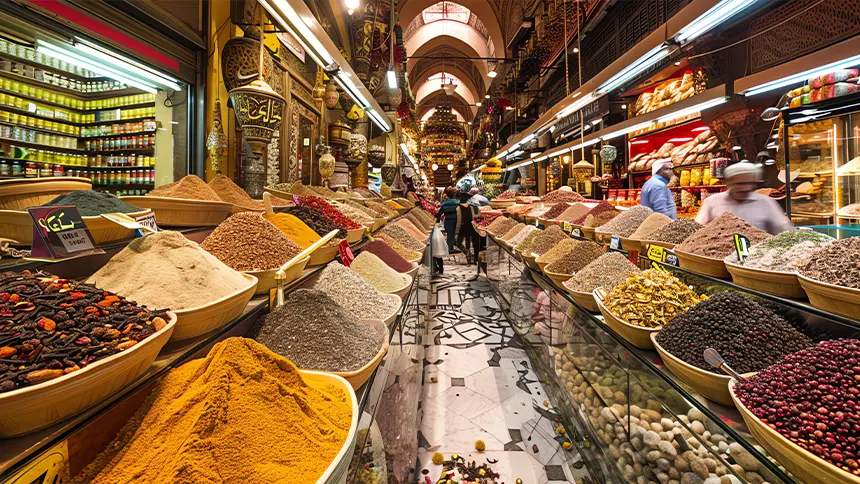
As commerce grew in the Emirates, many small towns and busy marketplaces, known as souqs, began to develop along the main routes. These souqs became the heart of local life, where merchants sold goods such as spices, textiles, gold, and pottery. People from nearby villages and faraway lands came to buy, sell, and exchange products. The coastal towns also became important economic centers because of pearl diving and fishing. Pearl diving was one of the main sources of income before oil was discovered. Divers collected natural pearls from the Arabian Gulf, which were then sold to merchants from India, Persia, and Europe. Fishing provided food and goods for local markets, helping communities survive in the harsh desert environment.
One of the most famous commercial spots was Dubai Creek, which connected the desert with the sea. Merchants arrived there on wooden dhows loaded with goods from Africa, India, and other parts of the Gulf. Over time, small settlements around the creek grew into large towns and later modern cities. These centers were not only places for business but also for meeting people, sharing ideas, and learning about other cultures. The spirit of these traditional markets still lives on today in the UAE’s modern souqs and shopping centers, which continue to welcome people from all around the world. The growth of these early commercial centers laid the foundation for the UAE’s success as a global trade hub.
Cultural and Economic Impact
The ancient trade networks had a strong influence on the culture and economy of the Emirates. Through commerce, people came into contact with merchants from India, Persia, Africa, and other parts of the world, which helped shape Emirati traditions, architecture, and lifestyle. Foreign merchants brought new goods like spices, silk, perfumes, and jewelry, while local products such as pearls, dates, and incense were sent abroad. These exchanges introduced new ideas, foods, clothing styles, and building designs to the region. Many old Emirati houses and forts were built using traditional techniques mixed with influences from other cultures. Business activities also encouraged the growth of local craftsmanship, as people learned to make pottery, carpets, jewelry, and wooden boats.
The economy of the Emirates became stronger as commerce increased, giving people more job opportunities and improving their way of life. Markets and souqs became centers of social life, where people met, shared news, and celebrated cultural festivals. The experience of dealing with merchants from different lands taught the Emiratis the values of respect, cooperation, and open-mindedness. Over time, this rich exchange of goods and culture helped create the friendly and welcoming spirit that the UAE is known for today. The economic strength and cultural diversity built through business exchanges continue to influence the modern UAE, keeping its traditions alive while embracing progress and global connections.
Preservation and Modern Significance
Today, the United Arab Emirates takes great care to preserve its rich commercial history and share it with future generations. Many archaeological sites and museums across the country display ancient artifacts such as pottery, coins, and tools used by early merchants. These collections help people understand how commerce shaped life in the past. Historic forts, old souqs, and caravan routes have been restored and protected as part of the UAE’s cultural heritage. Places like Al Fahidi Fort in Dubai, the Al Jahili Fort in Al Ain, and ancient caravan stops in Liwa attract visitors from around the world who want to learn about the country’s mercantile past.
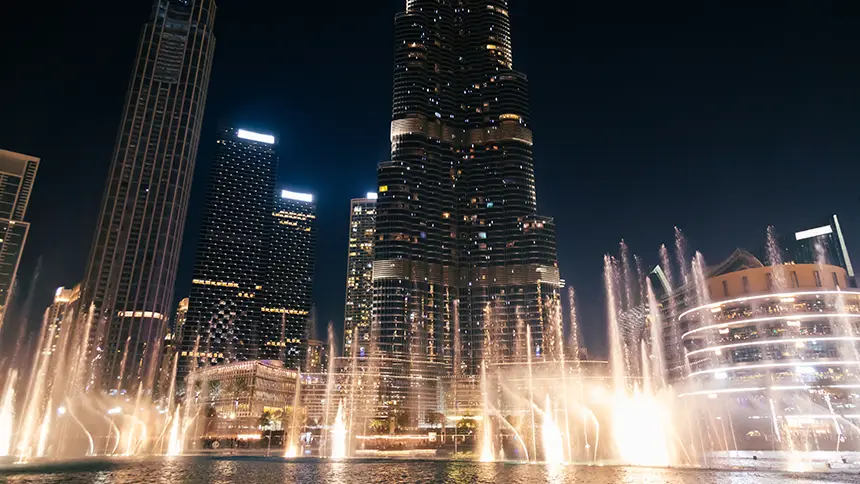
The UAE also uses these restored sites to promote tourism, allowing people to experience the history of desert caravans and sea routes. This preservation connects the old traditions of business with the country’s modern role as a global business center. The same spirit of commerce and openness that once guided the camel caravans and wooden dhows now drives the nation’s modern ports, airports, and free trade zones. The UAE’s success in international commerce and transport reflects its deep historical roots as a land of merchants and travelers. By valuing and protecting its heritage, the Emirates show how history and progress can work together to build a strong national identity and a bright future.
Conclusion
Ancient trade routes and caravan trails played a very important role in shaping the identity of the United Arab Emirates. Through land and sea commerce, the Emirati people connected with merchants from India, Persia, Africa, and other regions, exchanging goods, ideas, and cultures. These interactions influenced Emirati traditions, lifestyle, architecture, and craftsmanship, helping communities grow and thrive even in the harsh desert environment. Markets, ports, and caravan stops became centers of social life, learning, and economic activity. Today, the UAE continues this proud trading legacy on a much larger scale. Modern ports, airports, and free trade zones reflect the same spirit of business and openness that guided the ancient merchants. By preserving forts, souqs, and caravan trails, the Emirates honor their past while embracing the future. The history of commerce shows how connections between people and cultures can bring growth, understanding, and prosperity a legacy that continues to make the UAE a global hub for business and cultural exchange.