The United Arab Emirates is widely known for futuristic towers, luxury shopping malls, and desert adventures. However, tourism in the country is not just about modern attractions. Cultural heritage plays a major role in attracting international visitors. One of the most significant landmarks that highlights this balance between past and present is Fujairah Fort.
Considered the oldest surviving fort in the nation, it offers travelers a unique window into the region’s history. Tourists exploring this site not only witness traditional architecture but also enjoy a deeper understanding of how life looked centuries ago. Today, the stronghold contributes directly to the growth of the emirate’s travel industry as a cornerstone of heritage-based tourism.
Historical Significance
Built in the 16th century, Fujairah Fort is one of the oldest and most remarkable landmarks in the UAE. For travelers, it offers more than just a building to explore—it tells stories of resilience and defense, reminding visitors of how communities once relied on its walls for safety. Walking through its towers and halls gives tourists a chance to step back in time and imagine life centuries ago.
The ancient structure shows the creativity of local builders who used simple materials like mud, stone, and gypsum to create something strong and lasting. This traditional style allows visitors to see how Emiratis lived before modern development, providing an authentic view of the country’s past.
In a nation known for luxury and skyscrapers, the heritage landmark stands out as a symbol of tradition. For tourists seeking cultural depth, it offers a genuine connection to Emirati roots, making it a key destination for anyone exploring the history of the UAE.
Location and Accessibility
Tourism grows when attractions are easy to reach, and Fujairah Fort enjoys a prime position that makes it highly accessible. Located in Fujairah city along the scenic Gulf of Oman, the historic attraction is just a short drive from both the emirate’s airport and seaport, allowing visitors to arrive conveniently by air or sea. It is also well-connected by highways to Dubai, Sharjah, and other emirates, making it a popular stop for day trips and organized tours. This ease of access encourages both domestic and international travelers to include the site in their journeys, and many travel agencies highlight it as part of heritage tours.
Architectural Appeal and Design
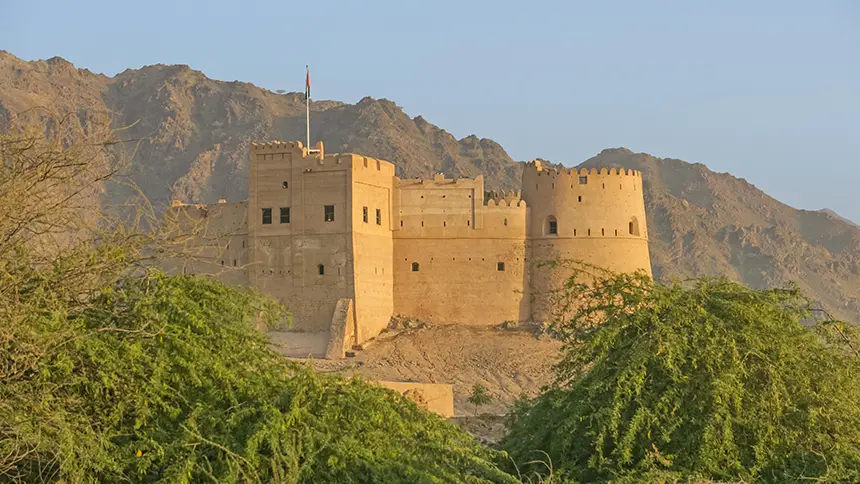
One of the main reasons tourists are attracted to Fujairah Fort is its distinctive architecture, which combines strength, simplicity, and cultural charm. Unlike many other forts in the UAE, the ancient fortress was built mainly with mud-brick, stone, and gravel, reflecting the creativity of local builders in adapting to harsh desert conditions. Wooden beams reinforced the walls, ensuring the structure could withstand weather and time.
The layout is equally impressive, with three circular watchtowers and one square tower rising above the central structure. These towers offer panoramic views of the surrounding city, mountains, and coastline, making them especially popular with visitors and photographers. Inside, the old monument contains spacious rooms that once served as halls for meetings, storage spaces, and living quarters. A large courtyard adds openness and natural light, giving tourists a sense of how daily life functioned centuries ago.
In terms of style, the historic site reflects both Islamic influence and local tribal craft skills. Its design balances strength with decorative touches, creating a structure that is both functional and beautiful. Today, travelers enjoy exploring it not only as a historic site but also as a place that offers striking visuals, cultural authenticity, and a unique window into the region’s past.
Cultural Tourism
Tourism today is not just about sightseeing; it is about storytelling. The heritage fort provides a perfect setting for cultural tourism.
- Festivals: Traditional events are hosted around the site to attract both locals and foreigners.
- Workshops: Visitors can learn about Emirati crafts and heritage.
- Performances: Folk dances, music, and poetry readings often take place in the courtyard.
- Educational tours: Schools and universities arrange field trips to educate students about history.
These activities transform the cultural landmark from a static building into a lively hub of tradition.
Importance and National Identity
Fujairah Fort is more than stone and clay; it is a living reflection of Emirati traditions and values. For centuries, it served as the residence of the ruling family and a central place where important decisions were made. Villagers gathered in its courtyards for festivals, events, and discussions, making it a hub of community life. The ancestral fortress also played a role in justice and administration, reinforcing its place as both a protective structure and a seat of leadership.
Beyond its practical functions, the pride symbol became a reminder of resilience for the people of Fujairah. Despite invasions and natural damage, it continues to stand tall, linking modern generations with its ancestors. Today, it represents values that define the UAE: unity among tribes, respect for heritage, and education through history.
Restoration and Tourist Experience
Tourists prefer well-maintained attractions. The historical fort underwent extensive restoration in the late 20th and early 21st centuries to prepare it for global visitors.
- Original materials were used to maintain authenticity.
- Skilled craftsmen reconstructed towers and walls.
- Signboards, pathways, and lighting were added to enhance the tourist journey.
This careful balance between preservation and modernization ensures that travelers enjoy comfort while still experiencing heritage in its original form.
Activities for Tourists
A trip to this Fort can be more than just walking through old walls. Tourism authorities have developed engaging experiences.
- Guided tours with storytelling about rulers and battles.
- Interactive displays showing how weapons and tools were used.
- Photography sessions during sunset for beautiful scenic captures.
- Evening events with lights illuminating the fort’s structure.
- Family activities such as traditional games and crafts.
These offerings make the site attractive for families, solo travelers, history lovers, and even business tourists.
Economic Role
Tourism linked to the historic landmark plays a vital role in the local economy. Visitors who come to explore the site often stay in nearby hotels and resorts, dine at local restaurants, and purchase traditional crafts and souvenirs. Heritage tourism also creates jobs for guides, performers, and artisans, ensuring that the ancient site is not only a cultural treasure but also a valuable economic asset for the UAE’s tourism industry.
Conclusion
Fujairah Fort is more than the oldest fort in the UAE; it is a gateway for tourism into Emirati culture. Standing strong for centuries, it welcomes modern travelers with open gates, offering history, architecture, and unique experiences. For the tourism industry, it has become a symbol of how heritage and economic growth can work hand in hand. The timeless stronghold is not just a place to see, it is a place to experience. It tells stories, hosts events, boosts businesses, and inspires visitors. Whether someone comes for cultural learning, family fun, or photography, this fort ensures that their trip to the UAE includes a piece of history that will never be forgotten.