The northern emirate of the United Arab Emirates, Ras Al-Khaimah, is widely known for preserving its strong traditions alongside modern development. Located in the UAE’s northern region, this emirate has a long history shaped by Bedouin desert life, mountain communities, and coastal pearl-diving settlements. Despite rapid urban growth, traditional dress and lifestyle continue to play an important role in everyday life. Men commonly wear the kandura, while women wear the abaya and sheila, reflecting values of modesty, respect, and cultural identity. Daily life in the region is deeply influenced by family bonds, hospitality, and Islamic practices, which guide social behaviour and routines. Community gatherings, traditional meals, and cultural celebrations help keep heritage alive among younger generations. Through its clothing, customs, and way of life, this northern emirate proudly maintains its Emirati identity while adapting to the modern world, making it a strong example of cultural continuity in the UAE.
Ras Al-Khaimah: Where History Shapes Identity
The emirate’s identity is deeply shaped by its rich history and strong cultural roots in both Bedouin desert life and coastal traditions. For centuries, the people of the area adapted to the harsh desert climate through nomadic lifestyles, while coastal communities depended on fishing, pearl diving, and maritime trade for survival. Before the discovery of oil, pearl diving was one of the main sources of income, connecting the northern region with traders from India, East Africa, and the Gulf. These early trade links helped shape the emirate’s open and resilient character.
Traditional values such as bravery, hospitality, and cooperation developed through desert living and seafaring experiences. Today, these customs are still respected and taught within families, ensuring cultural pride is passed down through generations. Historic sites like ancient forts, watchtowers, and archaeological areas further highlight the emirate’s long past, making heritage an essential part of daily life and national identity.
Traditional Dress: A Symbol of Identity and Values
Men’s Traditional Attire
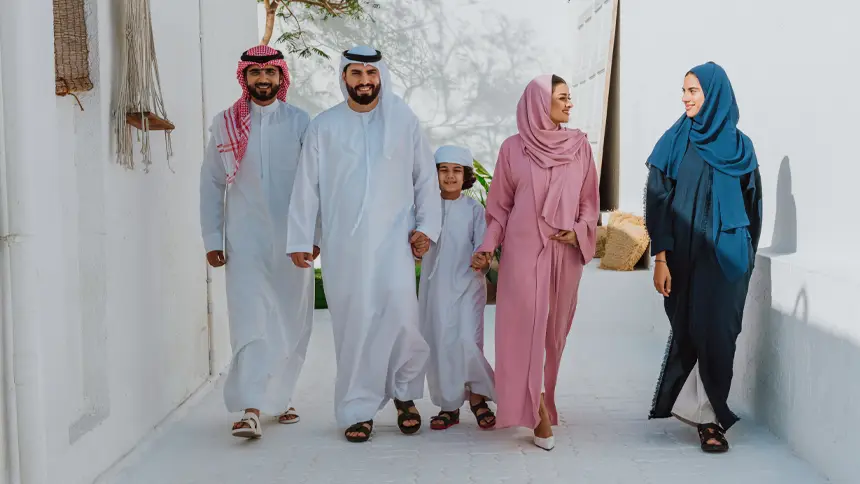
In the emirate, men traditionally wear the kandura, also known as the dishdasha, which is a long, white robe made from lightweight fabric. This garment is both simple and comfortable, ideal for the hot desert climate, while also reflecting cultural pride and identity. Men also wear the ghutra, a headscarf, secured with the agal, a black cord that symbolises respect and tradition. The ghutra protects the wearer from harsh sunlight and sand, showing how clothing in the region is designed for both practicality and heritage. This traditional attire is worn not only in daily life but also during festivals, family gatherings, and religious events, highlighting its importance in maintaining Emirati culture and identity.
Women’s Traditional Attire
Women in the northern emirate traditionally wear the abaya, a long, flowing black cloak that represents modesty, elegance, and cultural values. The abaya is often paired with the sheila, a headscarf that allows women to express their identity and personal style while respecting local traditions. Many women also wear traditional jewellery, which can include gold necklaces, bracelets, and earrings, often with intricate designs passed down through generations. These pieces reflect the area’s rich cultural heritage and craftsmanship. Women’s traditional clothing is designed to be modest, yet it can also be decorative and elegant, making it suitable for both everyday life and special occasions, ensuring that tradition continues to play an important role in modern Ras Al-Khaimah.
Key Features of Traditional Clothing
Traditional clothing in the emirate is characterised by modest designs, which are rooted in Emirati cultural values and religious practices. Fabrics are chosen to suit the hot and arid climate, making garments lightweight, breathable, and comfortable for daily wear. Clothing often features traditional colours, embroidery, and craftsmanship that reflect local artistic heritage. For example, men’s kanduras are usually plain white, while women’s abayas can include subtle embroidered patterns along the sleeves or hems. These details not only highlight cultural pride but also demonstrate the importance of preserving traditional skills. Overall, traditional dress in the region combines practicality, beauty, and cultural identity, making it a symbol of heritage and continuity in the modern world.
Lifestyle Rooted in Tradition
The lifestyle in the emirate is deeply rooted in tradition, reflecting strong cultural values and heritage. Family unity and respect for the elderly are central to daily life, with multiple generations often living together and making decisions as a family. Hospitality is considered a core value, and guests are always welcomed with warmth, traditional coffee, and dates. Daily routines are also influenced by religious practices, including prayer and participation in Islamic festivals, which help guide behaviour and social interactions.
Traditional lifestyle practices remain a key part of community life, such as majlis gatherings, where people meet to discuss news, share stories, and enjoy social exchange. Community celebrations and shared meals strengthen bonds, while storytelling and oral traditions preserve history, folklore, and cultural wisdom. These practices ensure that heritage remains alive and visible in modern the northern emirate.
Tradition in Everyday Life
In Ras Al-Khaimah, tradition is woven into everyday life, with many people continuing to wear traditional dress at home, in workplaces, and in public spaces. Men commonly wear the kandura, while women wear the abaya and sheila, reflecting respect for cultural values and religious practices. These garments are not only a symbol of identity but also a way to maintain modesty and connection to heritage. Cultural values guide behaviour and social interactions, encouraging respect for elders, strong family bonds, and community cooperation.
Despite rapid modernisation and urban development, residents of the emirate successfully maintain a balance between modern lifestyles and traditional practices, such as celebrating festivals, sharing meals with neighbours, and participating in Majli gatherings. This combination of heritage and modernity allows the region to preserve its unique identity while adapting to the demands of contemporary life, making tradition a visible and respected part of daily routines.
Conclusion
In Ras Al-Khaimah, cultural heritage is beautifully woven into modern living, with traditional dress and lifestyle continuing to play a central role in everyday life. Clothing such as the kandura, abaya, and sheila reflects a strong sense of identity, while daily practices like majlis gatherings, family meals, and storytelling help preserve social and cultural values. Despite rapid modernisation, these traditions remain relevant, guiding behaviour, strengthening family bonds, and fostering a sense of community. Heritage in the northern emirate is not only a connection to the past but also a source of pride and unity, ensuring that future generations understand and respect their roots. By balancing tradition with modern lifestyles, this emirate demonstrates how cultural identity can thrive in today’s world, making the region a living example of continuity, respect, and pride in Emirati heritage.