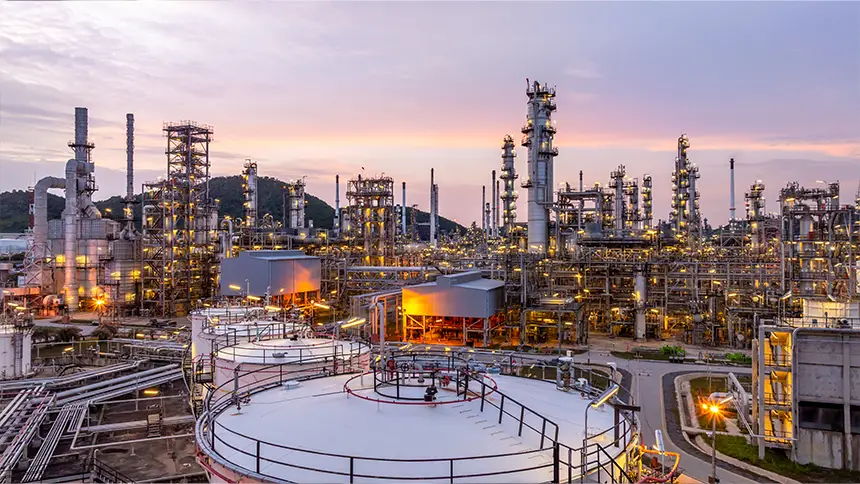
Petrochemicals are a cornerstone of the UAE’s economy, forming one of its most strategic industrial sectors. Derived from crude oil and natural gas, these products are the foundation of countless everyday items, from packaging and textiles to automotive parts and electronics. Over the past decades, the United Arab Emirates has transformed the petrochemical sector into a major business hub, attracting investment, fostering innovation, and contributing to national growth.
Understanding Petrochemicals in the UAE
Petrochemicals are chemical substances produced from petroleum or natural gas. They serve as raw materials for a wide variety of synthetic products critical to modern life. In the UAE, petrochemicals underpin industries ranging from construction and transportation to packaging and electronics.
Main Categories of Petrochemicals
Petrochemicals in the UAE can be broadly classified into three categories.
- Olefins: Includes ethylene and propylene, used to produce plastics, fibers, and elastomers.
- Aromatics: Such as benzene, toluene, and xylene, which are essential for synthetic fibers, detergents, and dyes.
- Synthesis Gas (Syngas): A mix of carbon monoxide and hydrogen used to manufacture ammonia, methanol, and other chemicals.
These products serve as building blocks for downstream industries, enabling the UAE to expand its industrial and trade capabilities.
The Evolution of the Petrochemical Industry in the Emirates
The UAE’s petrochemical sector expanded rapidly in the late 20th century as the nation leveraged its hydrocarbon resources. The government’s vision to diversify the economy beyond crude oil led to the establishment of integrated industrial zones and chemical clusters.
Key Stages of Growth
- 1970s–1980s: Formation of foundational petrochemical companies such as ADNOC and later, Borouge, to capitalize on oil and gas feedstock.
- 1990s–2000s: Expansion of petrochemical plants and adoption of advanced technologies for higher efficiency.
- 2010s–Present: Focus on sustainability, recycling, and innovation in high-value materials, including polymers and composites.
This evolution positioned the UAE as a competitive player in global petrochemical production.
Importance of Petrochemicals in the UAE’s Economy
Petrochemicals have far-reaching impacts in the Emirates, driving downstream industries, creating employment, and contributing significantly to national GDP.
Backbone of Manufacturing
Petrochemical derivatives in the UAE supply raw materials for the packaging, textiles, construction, and automotive sectors. Their versatility and cost-effectiveness make them indispensable to both industrial and consumer markets.
Economic Contribution
The petrochemical industry contributes billions of dirhams to the UAE economy each year. Companies like ADNOC, Borouge, and Abu Dhabi Polymers drive exports, generate jobs, and strengthen domestic manufacturing.
Value Chain Development
Integration of petrochemical units with refining operations maximizes feedstock use, reduces costs, and increases profitability. Such strategies enhance competitiveness and reinforce the UAE’s position as a global petrochemical hub.
Support for Innovation
Continuous research in the UAE produces advanced materials such as bioplastics, composites, and specialty polymers. These innovations support key industries, including construction, transport, electronics, and renewable energy projects.
Major Petrochemical Products in the UAE and Their Uses
- Ethylene: For plastics, pipes, packaging, and synthetic fibers.
- Propylene: Used in automotive parts, containers, and household products.
- Benzene: Key for resins, synthetic fibers, and rubber.
- Toluene: Applied in paints, adhesives, and coatings.
- Methanol: Fuel additives, solvents, and chemical production.
- Ammonia: Fertilizers and cleaning products.
- Styrene: Polystyrene packaging, insulation, and consumer goods.
These products are essential to the UAE’s diversified industrial base, supporting agriculture, construction, transportation, and manufacturing.
Regional Leadership: UAE in the Petrochemical Market
Middle East Hub
The Emirates is a regional leader in petrochemical production, leveraging abundant oil and gas reserves. Strategic locations like Ruwais Industrial Complex and Khalifa Industrial Zone enable large-scale production and exports. Companies such as ADNOC and Borouge drive global competitiveness.
Asia-Pacific Demand
The UAE exports significant volumes of petrochemical products to Asia, particularly India, China, and Southeast Asia, meeting growing industrial and consumer demand.
Innovation and Sustainability
UAE producers focus on high-value polymers, specialty chemicals, and eco-friendly solutions, ensuring compliance with international environmental standards.
Investment and Market Dynamics
The petrochemical sector in the Emirates is capital-intensive but profitable. Success relies on feedstock availability, infrastructure, favorable government policies, and technological adoption.
Key Drivers
- Feedstock Access: UAE’s natural gas and crude oil provide low-cost raw materials.
- Infrastructure: Industrial zones, ports, and transport networks streamline operations.
- Government Support: Policies encourage foreign investment, research, and industrial growth.
- Technology: Automation, AI, and efficient catalysts improve production and reduce waste.
Market Trends
- Growing demand in emerging markets and Asia-Pacific.
- Investments in sustainability and green chemistry.
- Strategic collaborations and joint ventures expand production capabilities.
Environmental and Sustainability Challenges
Despite economic importance, petrochemicals raise environmental concerns. The UAE is actively addressing emissions, waste, and energy efficiency.
Plastic Waste Management
Companies are investing in recycling technologies and biodegradable alternatives to reduce pollution.
Carbon Emissions
Production generates greenhouse gases, prompting the adoption of carbon capture, renewable energy, and process optimization.
Water and Resource Efficiency
Industrial plants are implementing closed-loop water systems and energy-efficient technologies to minimize environmental impact.
Circular Economy Transition
The UAE is promoting reuse, recycling, and waste-to-energy initiatives, with collaboration between government, industry, and communities.
Technological Innovations Shaping the UAE Petrochemical Future
Digital Transformation
AI, IoT, and analytics optimize operations, enhance safety, and improve product quality.
Green Chemistry
Bio-based feedstocks, hydrogen, and renewable energy are being integrated to reduce fossil fuel dependence.
Advanced Materials
High-strength, lightweight composites and specialty polymers are replacing traditional materials in construction, transport, and electronics.
Automation and Robotics
Automation improves precision, reduces human error, and streamlines maintenance, inspection, and logistics.
Economic Outlook and Business Opportunities
The UAE’s petrochemical sector remains resilient, with strong growth potential. Expanding renewable energy projects and regional industrial demand drive the continued need for advanced materials. Strategic investments in research, sustainability, and partnerships create long-term profitability, enhance efficiency, and position the Emirates as a global exporter.
The Role of Governments and Corporations
The UAE government and private companies share responsibility for sustainable growth. Government initiatives provide environmental regulations, green incentives, industrial zones, and support for research and innovation. Corporations focus on ethical practices, renewable technologies, waste reduction, workforce development, and community engagement, ensuring competitiveness while promoting sustainability.
Conclusion
Petrochemicals are a backbone of the UAE’s industrial and economic development. From everyday goods to high-tech materials, they are essential to growth and innovation. The Emirates’s focus on sustainability, technological innovation, and global partnerships ensures the sector’s long-term success. By embracing cleaner processes and circular practices, the UAE will continue to lead in the petrochemical business, driving progress, economic diversification, and environmental stewardship.