Breakfast is often called the most important meal of the day, and in Ajman, it carries a special cultural significance. The breakfast table here reflects a blend of traditional Emirati flavours, locally sourced ingredients, and dishes passed down through generations. Families in Ajman value both taste and nutrition, making mornings a celebration of simple, wholesome food.
The Essence of Breakfast in Ajman
In Ajman homes, breakfast is not merely a meal; it is a ritual that brings family members together. It often includes a combination of fresh bread, dairy products, sweet and savoury accompaniments, and aromatic beverages. Unlike fast-paced breakfasts in metropolitan areas, Ajman residents prefer unhurried mornings where food is prepared with care and shared with loved ones.
Characteristics of a Traditional Ajmani Breakfast
- Freshly baked bread: Many households make their own bread or purchase it from local bakeries.
- Local flavours: Ingredients like dates, honey, cheese, and eggs are central.
- Balanced nutrition: Meals often include carbohydrates, proteins, and natural sugars.
- Communal experience: Breakfast is typically enjoyed with family, emphasising hospitality.
This approach reflects Ajman’s cultural values, emphasising health, warmth, and togetherness.
Popular Traditional Breakfast Dishes
Ajmani dishes are varied, with some recipes having remained unchanged for decades. They often combine simple ingredients in ways that deliver rich flavours.
Balaleet
Balaleet is a sweet and savoury vermicelli dish that holds a special place in Emirati kitchens. It is traditionally served during breakfast on weekends or special occasions.
- Ingredients: Vermicelli noodles, sugar, cardamom, saffron, ghee, and eggs.
- Preparation: The noodles are first boiled, then sautéed in ghee with sugar and spices. A thin omelette is cooked separately and served on top of the sweetened vermicelli.
- Flavour profile: The dish balances the sweetness of the sugar and saffron with the richness of ghee and eggs.
Balaleet showcases how Emirati cuisine integrates simple staples like pasta and eggs into culturally meaningful dishes.
Chebab (Emirati Pancakes)
Chebab are traditional pancakes that are soft, slightly sweet, and enjoyed with cheese, honey, or date syrup.
- Ingredients: Flour, eggs, milk, sugar, yeast, and cardamom.
- Preparation: The batter is left to rise before cooking on a hot griddle. They are usually served stacked with toppings.
- Serving style: Locals often pair chebab with fresh cheese, ghee, or a drizzle of date syrup for added sweetness.
These pancakes are easy to prepare and remain a favourite for both children and adults.
Khameer Bread with Cheese and Labneh
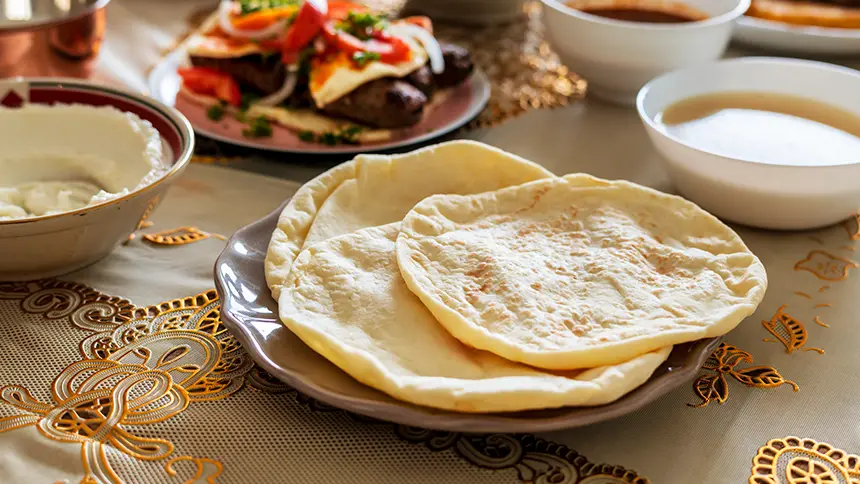
Khameer is a soft, leavened bread commonly baked in Ajman homes. It is a versatile dish, often eaten with cheese, labneh, or honey.
- Ingredients: Wheat flour, yeast, sugar, milk, and olive oil.
- Preparation: The dough is kneaded, allowed to rise, and then baked until golden.
- Serving style: Sliced and paired with creamy labneh, local cheeses, or honey, it provides a filling and nutritious start to the day.
This bread is appreciated for its light texture and the ability to complement both sweet and savoury accompaniments.
Dates and Milk
Dates are a staple in Emirati cuisine and are often eaten at breakfast, either alone or with milk.
- Nutritional benefits: Dates provide natural energy, fibre, and essential minerals.
- Traditional pairing: A glass of fresh camel or cow milk is commonly served alongside dates, making a wholesome and sustaining combination.
- Cultural significance: This simple pairing reflects centuries of dietary habits in the UAE and remains popular in Ajman homes.
This combination highlights how local ingredients can form a balanced and flavourful breakfast without extensive preparation.
Eggs with Tomatoes and Herbs
Eggs are a universal breakfast item, and in Ajman, they are often cooked with fresh tomatoes, onions, and a mix of herbs.
- Preparation styles: Fried, scrambled, or made into an omelette with local spices.
- Accompaniments: Often served with bread, olives, or a light salad.
- Flavour profile: The dish is savoury, aromatic, and highly customisable according to household preferences.
Eggs remain a versatile protein source and a daily favourite for Ajmani families.
Harees
Harees is a traditional dish made from wheat and meat, typically chicken or lamb. Though often served during Ramadan or special gatherings, it is also eaten for breakfast in some homes.
- Ingredients: Crushed wheat, meat, ghee, and a pinch of salt.
- Preparation: The wheat and meat are cooked slowly until soft, creating a porridge-like consistency.
- Serving style: Often drizzled with ghee for richness.
Harees provides a hearty, filling meal that is both comforting and nutritious.
Beverages Commonly Served with Breakfast
Ajman breakfast is incomplete without traditional beverages that complement the dishes.
- Karak Tea: Strong tea with milk, cardamom, and sugar, often brewed at home for a fragrant, rich flavour.
- Arabic Coffee: Lightly roasted coffee served in small cups, sometimes infused with cardamom for added aroma.
- Fresh Juices: Locally prepared juices from oranges, pomegranates, or mangoes are often included for vitamins and refreshment.
These drinks are carefully chosen to enhance the taste of morning meal items and provide a boost of energy for the day.
Breakfast Etiquette in Ajman Homes
In Ajman, breakfast is more than a routine meal; it is a meaningful experience shaped by tradition, family, and hospitality. Families often gather together, sharing the meal around a table where everyone can participate in serving and enjoying the dishes. Meals are typically placed at the centre, allowing each member to serve themselves, creating a sense of community and shared enjoyment. There is also a strong emphasis on mindful eating—savouring each bite, appreciating the flavours, and engaging in conversation. This approach reflects the importance Ajmani culture places on family bonds and preserving cultural traditions through everyday practices.
Modern Influences on Traditional Breakfasts
While traditional breakfast dishes remain cherished in Ajman homes, modern influences are gradually shaping how mornings are experienced. Some families have started incorporating fusion dishes, combining Western items like toast or cereals with classic Emirati flavours. Health-conscious variations are also becoming more common, such as using whole wheat flour, low-fat cheese, or plant-based milk to make meals lighter and more nutritious. Additionally, busy weekdays sometimes call for convenient cooking, with pre-prepared mixes or partially cooked breads that save time without compromising authenticity. These adaptations allow traditional breakfast dishes to stay relevant and enjoyable in today’s fast-paced lifestyle while still honouring their cultural roots.
Conclusion
Traditional breakfasts in Ajman represent a beautiful intersection of culture, family, and nutrition. From sweet vermicelli dishes to soft bread, fresh dates, and aromatic tea, each item tells a story of heritage and care. Meals are prepared thoughtfully, served with warmth, and enjoyed at a relaxed pace. Even as modern lifestyles influence eating habits, Ajmani homes continue to cherish these classic dishes, preserving a rich culinary legacy for future generations.