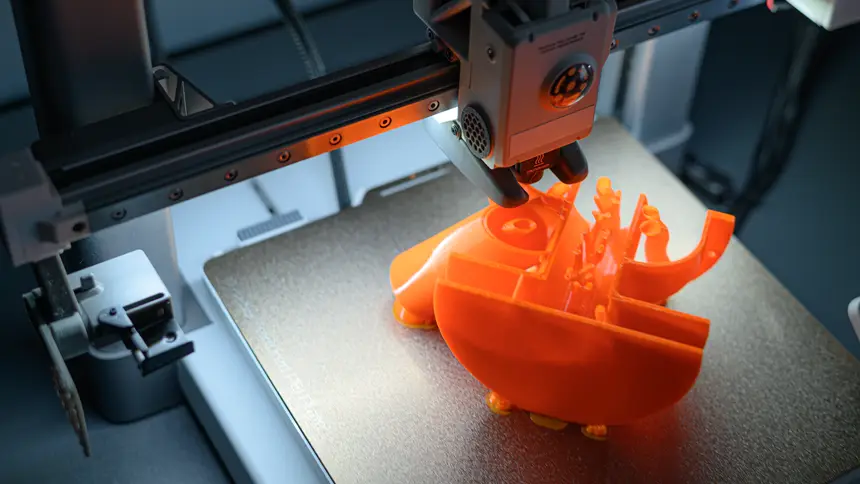
The United Arab Emirates is transforming its manufacturing sector with the rise of 3D printing factories, which make production faster, more efficient, and highly competitive. Additive manufacturing builds objects layer by layer from digital files, unlike traditional methods that cut or drill material. Over the past decade, this technology has grown from small workshops to large industrial zones, producing parts, prototypes, construction components, and healthcare equipment. Backed by government support and private investment, the UAE is becoming a regional hub for advanced production, offering significant advantages, practical applications, and new opportunities for businesses and workers.
Why the UAE Is Embracing 3D Production Hubs
Several economic and strategic forces drive the UAE to adopt large-scale additive systems.
Economic Diversification Goals
The UAE is actively expanding its economy beyond oil and gas by investing in advanced industries. Technology-driven manufacturing plays a key role in creating skilled jobs and building sustainable growth. By focusing on high-value industrial exports, the country also strengthens its position in global trade.
Government-Led Strategic Vision
National development plans place strong emphasis on innovation, smart cities, and future technologies. Government funding, incentives, and subsidies support research centres and pilot projects, helping new ideas move quickly into real-world use. Strategic partnerships with global technology leaders further speed up adoption and knowledge transfer.
Access to Skilled Talent
The UAE benefits from a growing pool of skilled professionals trained in digital design and modern production methods. Universities and technical institutes offer specialised programs, while international experts relocate to support advanced factories. At the same time, local engineers gain hands-on experience with next-generation tools and workflows.
Global Market Demand
Companies worldwide are looking for faster and more efficient manufacturing solutions. The UAE’s strategic location makes it an ideal base for regional service and supply networks. From here, businesses can reach markets across Africa, Asia, and Europe with shorter delivery times and improved efficiency.
Together, these forces help turn the Emirates into one of the Middle East’s most exciting arenas for future production technologies.
Core Benefits of Additive Manufacturing Plants
Firms in the UAE are building and expanding facilities that use digital fabrication systems because they provide several clear advantages over older production lines.
- Speed and Responsiveness – This enables rapid prototype creation from digital designs, allowing businesses to respond quickly to customer needs.
- Lower Material Waste – Additive methods minimize material use, cut costs, and support eco-friendly production with recycled materials.
- Customised Design Capabilities – This approach enables customized products, cost-effective small runs, and complex designs beyond traditional methods.
- Cost Efficiency for Complex Parts – Additive tools produce complex shapes in one piece, cutting assembly steps and costs.
- Reduced Supply Chain Burdens – On-site production lowers supplier reliance, shipping costs, emissions, and improves inventory control.
- Enabling Innovative Industries – Advanced systems boost aerospace, automotive, and healthcare innovation with rapid prototyping and material testing.
These benefits show why companies and authorities in the Emirates are investing heavily in large-scale digital production.
Real Applications in UAE Manufacturing Facilities
Across urban centres such as Dubai, Abu Dhabi, and Sharjah, digital fabrication facilities are producing notable products that demonstrate the versatility of this technology.
Building and Construction
Additive factories supply:
- Customised structural parts
- Decorative elements for modern architectural projects
- On-site printing of concrete components
Projects demonstrate how modular systems and lightweight assemblies can reduce construction time and field labour requirements.
Medical and Healthcare Devices
Medical additive facilities developed:
- Patient-specific implants
- Prosthetic limbs
- Surgical tools adapted to exact anatomical requirements
These applications improve patient outcomes and reduce waiting periods for custom devices.
Aerospace and Defence
Factories produce:
- Lightweight components for aircraft
- Complex parts for satellites and drones
- Specialised tooling
This supports local aerospace companies and global partners working from UAE innovation centres.
Consumer Goods and Electronics
Manufacturers craft:
- Unique product casings
- Limited edition designs
- Replacement parts for appliances and gadgets
These small runs help businesses test markets without large inventory risks.
Automotive and Mobility
Additive hubs supply:
- Performance parts
- Rapid prototypes for vehicle redesign
- Custom fixtures and jigs
Automobile engineers benefit from fast iterations and fit testing.
Education and Research
Technical universities and innovation labs use factories to:
- Train the next generation of engineers
- Explore new materials and machine controls
- Collaborate with industry partners on real projects
This creates a pipeline of local talent ready to work in tomorrow’s industrial environment.
How Factories Integrate With Industry 4.0
Manufacturing in the UAE goes beyond 3D printing, forming part of the broader Industry 4.0 transformation. This includes internet-connected machines, smart data analytics, and autonomous workflows. Additive factories use sensors and digital twins to track performance, while artificial intelligence and cloud-based planning make operations adaptive and predictive.
These integrated systems allow factories to coordinate across supply chains, share production plans, and reduce downtime through real-time alerts. The approach improves quality control, lowers energy consumption, and keeps equipment running efficiently, driving UAE industrial plants toward a fully digital future.
Challenges Facing 3D Printing Factories in the UAE
Despite strong progress, several obstacles limit the full potential of 3D printing in the UAE. High initial costs for advanced machines and software, the need for skilled technicians, and long return-on-investment periods pose financial challenges. Regulatory and certification standards are still evolving, while international product rules require careful compliance. Limited local production of printing materials also raises costs, as many powders and resins must be imported.
Talent shortages and competition for experts add another layer of difficulty, with training programs still expanding to meet demand. Additionally, some traditional manufacturers may resist adoption, questioning reliability or cost-effectiveness. These challenges highlight areas for investment and planning but do not diminish the transformative potential of additive manufacturing.
Strategies to Accelerate Growth
To ensure that additive hubs continue to expand across the Emirates, industry leaders and policymakers are focusing on the following strategies.
- Investing in workforce development involves scholarships, practical training, and international partnerships to build skilled talent.
- Encouraging public-private partnerships includes joint projects, shared innovation spaces, and funding for startups and research teams.
- Strengthening supply chains involves supporting local material production, offering supplier incentives, and improving logistics to lower import costs.
- Creating clear standards involves certification protocols, safety and quality regulations, and alignment with global best practices.
- Promoting success stories involves sharing case studies, hosting conferences for idea exchange, and creating demonstration sites to attract investors.
These approaches help ensure that the UAE’s industrial ecosystem embraces the full potential of modern production technologies.
Impact on Workers and Employment
The growth of advanced facilities brings new opportunities and demands in the labour market:
Positive Outcomes
- Demand for engineers, programmers, and controllers increases.
- New jobs in machine maintenance and digital design emerge.
- Higher wages and specialist roles boost the economy.
Adjustments Required
- Workers in traditional sectors may need retraining.
- Education must shift toward digital literacy and process thinking.
- Flexible learning models help professionals stay competitive.
Overall, the transition is creating more skilled jobs and enhancing the value of local talent.
Future Outlook: What to Expect Next
The growth of additive manufacturing facilities in the UAE is still at an early stage, but the next decade is expected to bring rapid progress. More industries, including energy, logistics, and industrial services, will adopt advanced production tools as part of daily operations. Factories will become smarter through the use of sensors and data-driven systems that improve efficiency and reduce downtime. New service-based business models, such as on-demand part production, will expand across regional markets. At the same time, recycling and low-waste methods will support sustainability goals. As costs fall and acceptance increases, UAE-based companies will become stronger competitors in the global manufacturing market.
Conclusion
The growth of 3D printing facilities is transforming manufacturing in the UAE, making production faster, more efficient, and innovative. While companies benefit from material savings, new product possibilities, and reduced supply chain risks, they face challenges like high initial costs, regulatory hurdles, and the need for skilled talent. Strategies such as workforce development, partnerships, and clear standards help overcome these barriers. For workers, this shift offers new opportunities and requires updated skills, positioning the UAE’s industrial sector for accelerated growth, greater competitiveness, and a future focused on innovation, sustainability, and economic diversification.