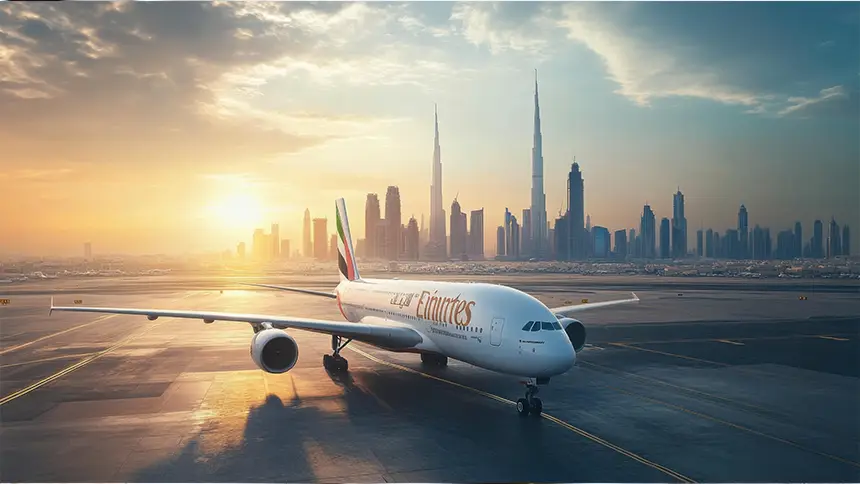
Air travel has become one of the most powerful forces shaping international trade, tourism, and cultural exchange. Among the many airlines that dominate global skies, Emirates Airlines stands out as a pioneering brand. Based in Dubai, United Arab Emirates, it has grown from a modest regional carrier into one of the world’s largest and most admired aviation companies. Today, the airline is more than just a transport service, it is a business icon, a national pride, and a bridge between continents.
The Origin Story
The carrier was founded in 1985 with only two leased aircraft and a small staff. The government of Dubai wanted to reduce dependence on foreign carriers and create its own global airline. In less than four decades, the airline turned from a regional challenger into a world leader.
Key milestones
- 1985 – First flights launched with a leased Boeing 737 and Airbus 300.
- 1990s – Rapid expansion across Asia and Europe.
- 2000s – Became one of the largest wide-body aircraft operators.
- 2010s – Known for luxury service and record-breaking fleet orders.
- Today – Serves more than 150 destinations across six continents.
Business Model and Strategy
The business strategy of the airline is built on four strong pillars.
Hub-and-Spoke Model
It operates on a hub-and-spoke model, routing all its flights through Dubai International Airport. The city’s strategic location at the crossroads of Europe, Asia, Africa, and the Americas allows the company to connect passengers to hundreds of destinations with fewer direct flights. This approach maximizes efficiency and strengthens Dubai’s role as a global aviation hub.
Focus on Wide-Body Fleet
The operator relies exclusively on wide-body aircraft such as the Boeing 777 and Airbus A380. By choosing larger planes, the company can transport more passengers and cargo per flight while offering superior comfort and services. This strategy not only ensures operational efficiency but also supports strong revenue growth through economies of scale.
Premium Branding
A defining feature of the airline is its emphasis on premium service. From spacious airport lounges and fine dining to award-winning entertainment systems and private suites, the carrier positions itself as a luxury travel brand. Maintaining consistent quality across all routes has helped build a strong, trusted identity worldwide.
Diversified Revenue Streams
While passenger travel is the primary source of income, the airline has successfully diversified its business. Its cargo division, SkyCargo, plays a crucial role in global trade, while strategic partnerships and code-sharing agreements extend its international reach. This balance of services creates stability and resilience in a competitive industry.
Role of Dubai in Emirates’ Growth
Dubai has been central to the success of the carrier. Its strategic location places two-thirds of the world’s population within an eight-hour flight, making it an ideal transit hub. Strong government investment in aviation infrastructure, including one of the busiest international airports, has further supported growth. As a leading tourism destination, Dubai provides a steady stream of passengers, while its liberal open skies policy ensures maximum global connectivity, helping the airline expand rapidly across continents.
Innovation and Technology
The airline is known for adopting cutting-edge technologies to improve business operations and customer satisfaction.
- In-flight Entertainment (ICE): One of the first airlines to offer personal screens and a massive library of movies, music, and TV.
- Wi-Fi Connectivity: High-speed internet available on most flights.
- Aircraft Investment: The world’s largest operator of Airbus A380s, offering unmatched passenger comfort.
- Sustainability Programs: Investments in fuel-efficient aircraft, waste reduction, and carbon-offset initiatives.
- Digital Transformation: Mobile apps, AI-driven customer support, and smart boarding systems.
Global Business Impact
The airline has a strong influence on both the UAE economy and the global aviation sector, making it a key driver of growth and innovation.
Contribution to UAE
In the UAE, the carrier generates thousands of jobs for residents and expatriates, directly and indirectly supporting the nation’s workforce. Its global network attracts millions of travelers to Dubai every year, strengthening the tourism and hospitality industries. Beyond tourism, SkyCargo plays an essential role in trade by moving goods efficiently across continents, helping businesses connect with international markets. Together, these contributions reinforce Dubai’s standing as a dynamic global business hub.
Contribution to Global Aviation
At a worldwide level, the operator has expanded connectivity by flying to regions that were previously underserved, offering passengers more travel options. The company is also recognized for setting new standards in comfort, service, and technology, influencing competitors to raise their quality levels. By maintaining a competitive edge, it stimulates healthy rivalry in the industry and fosters innovation. Furthermore, its record-breaking aircraft orders from Airbus and Boeing provide a major boost to the aerospace manufacturing sector, creating jobs and supporting supply chains around the world.
Challenges Faced
Like every multinational business, the carrier faces its share of challenges.
- Competition: From Qatar Airways, Turkish Airlines, and traditional Western carriers.
- Economic Downturns: Global recessions reduce travel demand.
- Fuel Prices: Volatility in oil markets directly affects profitability.
- Geopolitical Risks: Regional conflicts can impact passenger traffic.
- Environmental Pressure: Increasing criticism over carbon emissions.
Strategic Responses to Challenges
The airline has stayed competitive by adopting flexible strategies to counter industry challenges. It uses fuel hedging to reduce the impact of price fluctuations and invests in modern, fuel-efficient aircraft like the Boeing 777X. Strategic partnerships, such as its agreement with Qantas, expand route networks and strengthen market presence. The business has also diversified by boosting its cargo and logistics operations, reducing reliance on passenger traffic. Additionally, its Skywards loyalty program helps retain frequent travelers and build long-term customer relationships.
Emirates SkyCargo: Business Beyond Passengers
Cargo is a hidden but powerful part of the company’s business. It operates dedicated freighter aircraft that transport a wide range of goods, from electronics and machinery to perishables and pharmaceuticals. During the COVID-19 pandemic, the operator played a vital role by carrying vaccines and medical supplies worldwide. Through these operations, the carrier helps Dubai maintain its role as a global trading center.
Marketing and Branding Excellence
The company invests heavily in global branding to strengthen its presence. It has long-term sports sponsorships with football clubs such as Arsenal, Real Madrid, and AC Milan, while also partnering with major tennis, cricket, and rugby tournaments. The operator maintains a consistent identity through its red and white logo with Arabic calligraphy, reflecting both modernity and heritage. Advertising campaigns focus strongly on comfort, service, and connection, making the airline recognizable worldwide, even to those who have never flown with it.
Sustainability
The aviation industry is under pressure to reduce carbon emissions, and the company is responding actively.
- Fuel Efficiency: Investing in new aircraft that burn less fuel.
- Biofuels Research: Testing alternative fuels to reduce environmental impact.
- Recycling Programs: Cutting single-use plastics and improving onboard recycling.
- Long-Term Vision: It aims to balance profitability with responsibility to the planet.
Conclusion
From humble beginnings in 1985, the carrier has transformed into one of the world’s most powerful aviation brands. It connects people, goods, and ideas across continents while contributing massively to Dubai’s economy and global tourism. The airline has faced challenges, but its innovative strategies, strong branding, and focus on customer experience have kept the business resilient.
As the aviation industry evolves, the operator is not just flying passengers from one city to another, it is connecting the world. Its story is a business case study in vision, execution, and global ambition.